

Life and Livelihood of Women Fishers Under Climate Pressure
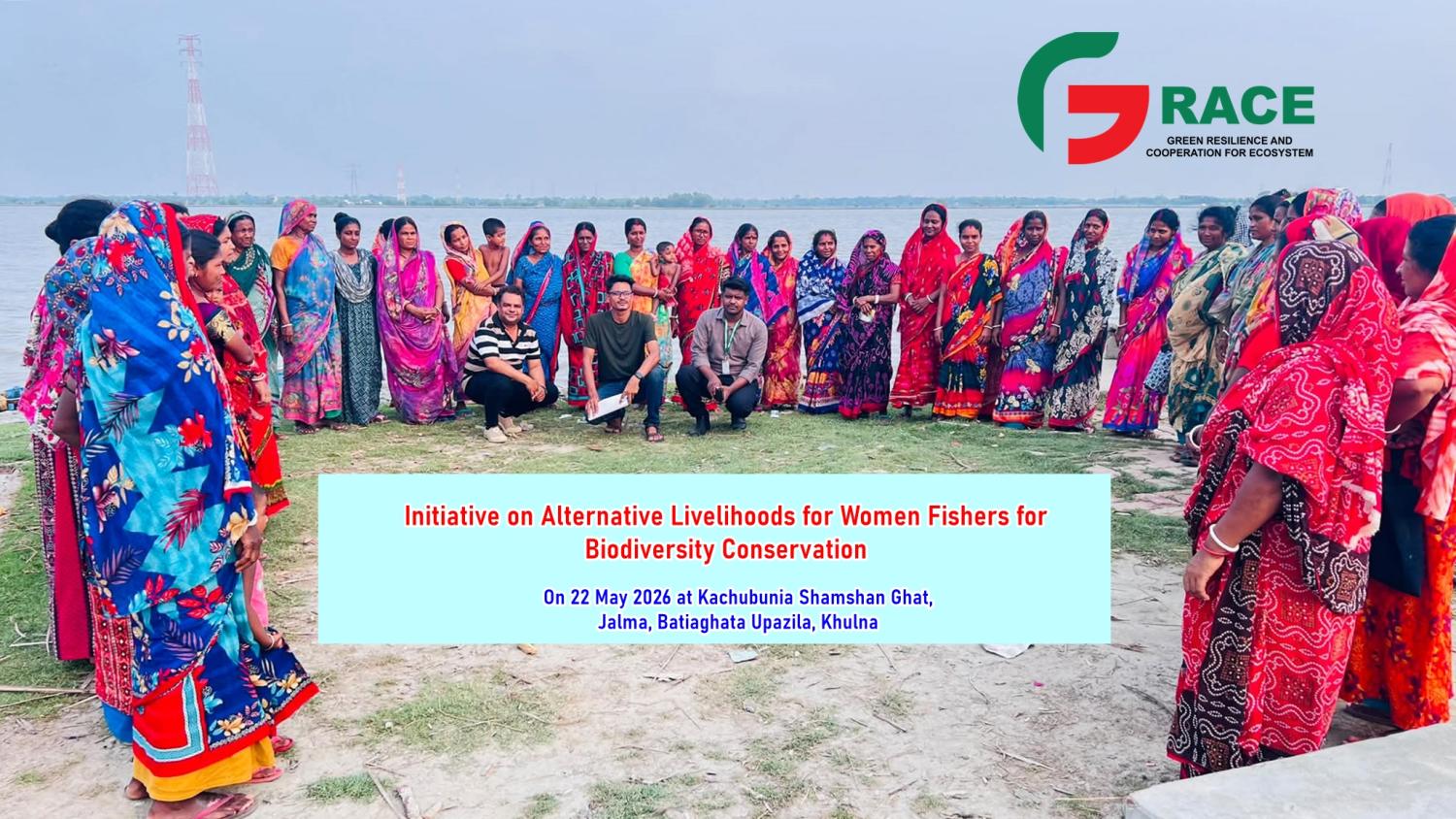


Initiative on Alternative Livelihoods for Women Fishers for Biodiversity Conservation
Voices from the Riverbank: Life and
Livelihood of Women Fishers Under Climate Pressure
Introduction
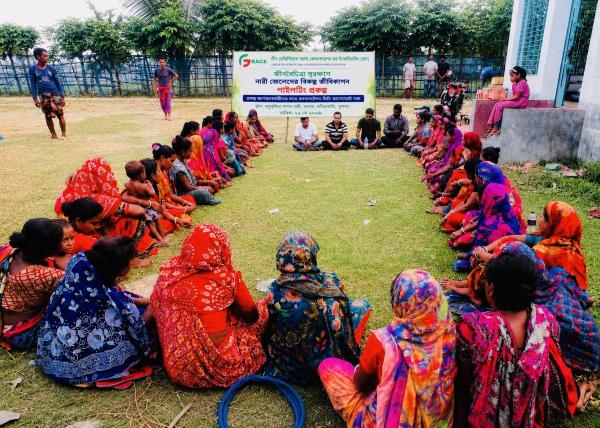
A consultation and needs assessment
meeting was organized under the project “Pilot Initiative on Alternative
Livelihoods for Women Fishers for Biodiversity Conservation” implemented by
the Green Resilience and Cooperation for Ecosystem (GRACE).
The meeting was held on 22 May 2026 at Kachubunia Shamshan
Ghat, Jalma, Batiaghata Upazila, Khulna. A total of 50 women fishers
participated in the session.
During the consultation, detailed discussions were held on their daily
livelihoods, income-generating activities, children’s education, and the
impacts of climate change on their lives, along with possible solutions to
address these challenges. The session also emphasized the importance of
biodiversity conservation through the creation of sustainable and alternative
livelihood opportunities.
GRACE continues to work dedicatedly to improve the quality of life of marginalized women fishers while promoting environmental protection and ecosystem sustainability.

Major Insights:
ü The
women in the community are highly dependent on the river for their daily
livelihood, primarily relying on fishing as their main source of income.
ü During
natural disasters, adverse weather conditions, or government-imposed
restrictions, they are unable to go fishing, which significantly affects their
food security. In such periods, many households are forced to reduce their
meals to one or two times a day instead of three.
ü Most
of the families live in very vulnerable conditions along the riverbank in
small, fragile huts, making them highly exposed to environmental risks such as
flooding and storms.
ü On
average, when fishing is possible, women earn around BDT 200 after spending 2–3
hours in the river. However, this livelihood activity comes with constant fear
of storms, strong currents, and the risk of crocodile attacks, making their
daily survival both physically demanding and unsafe.
ü On
average, each woman fisher is able to catch fish for around 10 to 15 days per
month, earning approximately BDT 2,000 to 3,000 monthly. During peak fishing
seasons, their income may increase to around BDT 5,000 to 6,000, depending on
catch availability and weather conditions.
ü The
Government has provided Fisherman Cards as a form of safety net support;
however, this assistance is not sufficient to sustain the livelihoods of
families, which typically consist of 4–5 members.
Solutions for Alternative Livelihoods:
- Handcrafted fishing
net making
- Poultry rearing (duck
and hen farming)
- Livestock rearing
(goat, sheep, cow, etc.)
- Small-scale business
initiatives such as:
- Static tea stall
- Mobile/van-based
floating vending
- Tailoring and sewing
activities through skill development training
- Handmade product
development (bamboo crafts, mats, etc.)
- Food processing and
home-based small catering services
- Crab fattening
or small-scale aquaculture activities
- Fish drying and
value-added fish product preparation
Additional Options Could be….
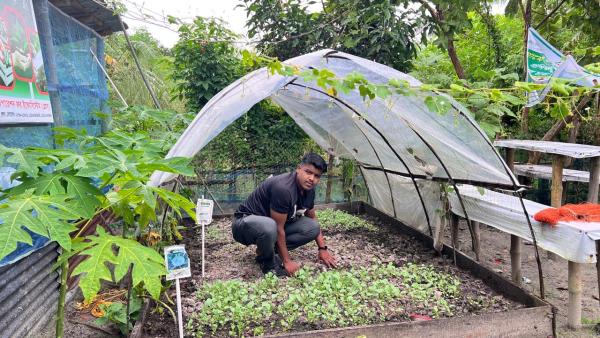
- Vegetable gardening
for household consumption and local sale
- Linkage with existing eco-tourism based Business

Explore further

Our Partners