

Background, Mission, Vision & Core Values
Background
Bangladesh's development journey continues to captivate researchers and countries worldwide as a story of resilience and transformation. Since gaining independence in 1971, the country has experienced over five decades of remarkable progress intertwined with political, environmental, and socio-economic challenges. While political upheavals have significantly shaped the nation, recurring natural calamities and man-made disasters have frequently disrupted its momentum, forcing the country to recover and rebuild repeatedly.
Despite these setbacks, Bangladesh has emerged as a development model, showcasing resilience and adaptability. The people of Bangladesh have continually demonstrated their hardworking spirit and ability to find alternatives amidst adversity. However, despite this progress, the nation is still striving for sustainable development that benefits all groups of people equally. Although opportunities and initiatives have arisen, they have not yet translated into meaningful, inclusive change for all segments of the population, especially the disadvantaged groups. Socio-economic disparities persist, with marginalized communities yet to experience significant improvement in their living standards. Social justice, equity, and health remain goals yet to be fully achieved. While economic growth is often highlighted as a measure of development, other critical indicators, such as governance, quality of life, and socio-demographic metrics, still fall short of expectations. Geographical disparities further compound these challenges, particularly in the southern region, where natural disasters regularly claim lives and disrupt livelihoods. Unfortunately, many of these challenges are exacerbated by human-made disasters, which could have been mitigated with better planning and foresight.
In 2015, a group of motivated young individuals established the Welfare and Peace Foundation Khulna (WPF Khulna), initiating small-scale voluntary activities in the Sonadanga area of Khulna city corporation. Between 2015 and 2023, WPF Khulna focused on vocational training and tree-planting projects, which positively impacted urban and rural communities in the Khulna district. These initiatives were made possible through community funding and contributions from its founding members.
In 2024, the general board decided to rename the organization as Green Resilience and Cooperation for Ecosystem (GRACE), reflecting a broader vision and mission. This decision was formally ratified by the Social Service Department. While WPF Khulna was originally registered in 2016, GRACE began operating under its new identity from April 2024, marking a fresh chapter in its commitment to fostering sustainable development and social welfare in Bangladesh.
In the wake of Bangladesh’s historic political transition on August 5, 2024—a turning point that opened the door for real democratic reform and accountability—the long-awaited possibility for authentic development has become tangible. Within this new landscape, strategic partnerships with progressive organizations will be essential to scaling community-driven climate adaptation, inclusive livelihoods, and robust social protection in Bangladesh’s coastal and urban hotspots.
GRACE believes that only an honest, transparent process—underpinned by strategic, long-term commitment—can illuminate a true pathway for deprived and marginalized communities. By forging alliances and harnessing the spirit of reform, we are dedicated to building, bonding, and belonging together as we advance resilient and inclusive change for Bangladesh’s most vulnerable populations.
Vision
In our quest for a society free from poverty, we aim to promote human rights, uphold dignity, and champion social justice. Our commitment to youth and women’s empowerment extends to building local capacities, eliminating gender discrimination, and mitigating vulnerability to climate change. By fostering an environment that prioritizes these values, we envision a comprehensive transformation that not only eradicates poverty but also ensures the empowerment and resilience of our communities—building, bonding and belonging — together.
Mission
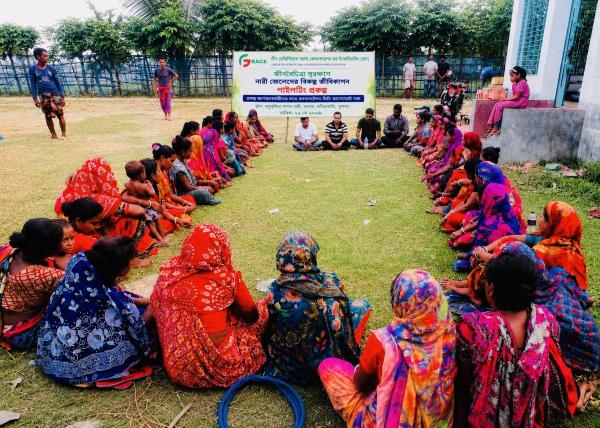
GRACE’s mission is to collaboratively work with communities, fostering socioeconomic advancement, promoting gender equity, and driving positive transformations among marginalized, disadvantaged, and vulnerable individuals in society. Through close partnerships with government line departments, local governance structures, civil societies, NGOs, private sectors, development partners, and diverse stakeholders, we catalyze inclusive and sustainable change. Committed to advancing resilient, equitable, and inclusive development in harmony with national and international frameworks, we strive to empower communities and strengthen solidarity—building, bonding and belonging — together.
Our Core Values and Principals:
a) Humanity: We prioritize human welfare and dignity in all our actions.
b) Teamwork: We emphasize collective effort and collaboration.
c) Innovation: We want to promote change through creative methods, to shine a light on ignored issues. We have a culture of improving ideas from the grassroots. We are resilient and view failure as something to learn from and do better next time.
d) Honesty, Accountability, and Transparency: We maintain integrity, responsibility, and openness in our operations. We believe in honesty. We want our work to be as visible as possible and maximum access to information regarding the management of resources and the impact of our actions, in pursuit of the highest level of social and economic accountability to encourage everyone to join us in our vision.
e) Leadership: We inspire and guide others towards achieving shared goals.
f) Sensitiveness (Gender, Children and Youth): We are committed to addressing gender disparities and promoting equality.
g) Community Participation: We engage and involve communities in our decision-making processes.
h) Respect & Empathy: We treat everyone with respect and strive to understand diverse perspectives. We believe in showing kindness and empathy towards all individuals, regardless of their background or circumstances. By practicing compassion, we can create a more inclusive and understanding society
i) Justice, Equity, and Inclusion: We strive for fairness, equal opportunities, and inclusiveness for all.
j) Sustainability & Resilience: We are committed to protecting the environment and preserving resources for future generations. By promoting sustainability, we can ensure a healthy and thriving planet for all humanity
k) Collaboration and Cooperation: We believe in working together with others to address the challenges facing humanity. By collaborating with diverse perspectives and talents, we can create innovative solutions to complex problems.
Our Partners