


GRACE AGRO INNOVATION LAB


Harnessing Green Innovation through Climate adaptation: Developing capacity to the community farmer, From Safe Food to Thriving Green Businesses,
GRACE AGRO INNOVATION LAB
Peri-Urban Areas of Khulna
“Harnessing Green Innovation through Climate adaptation: From Safe Food to Thriving Green Businesses”.

In Bangladesh, the “charlands” (river islands) cover about 830,000 hectares, of which 60 %-90 % are cultivable, offering significant potential for climate-smart agricultural intensification. In the Khulna agricultural region (Khulna, Bagerhat, Satkhira, Narail districts), of about 544,049 hectares of cultivable land, 66,000 hectares remain entirely fallow, and another 19,000 hectares are underutilized for much of the year outside the Aman rice season. In urban and periurban Khulna (e.g. Batiaghata Upazila), roughly 61% of households are engaged in agriculture, facing frequent climate hazards such as salinity intrusion, waterlogging, and erratic rainfall — yet these same risks strengthen the case for adopting sustainable, resilient farming of unused or marginal lands.[Sources: IRRI and daily Observer]

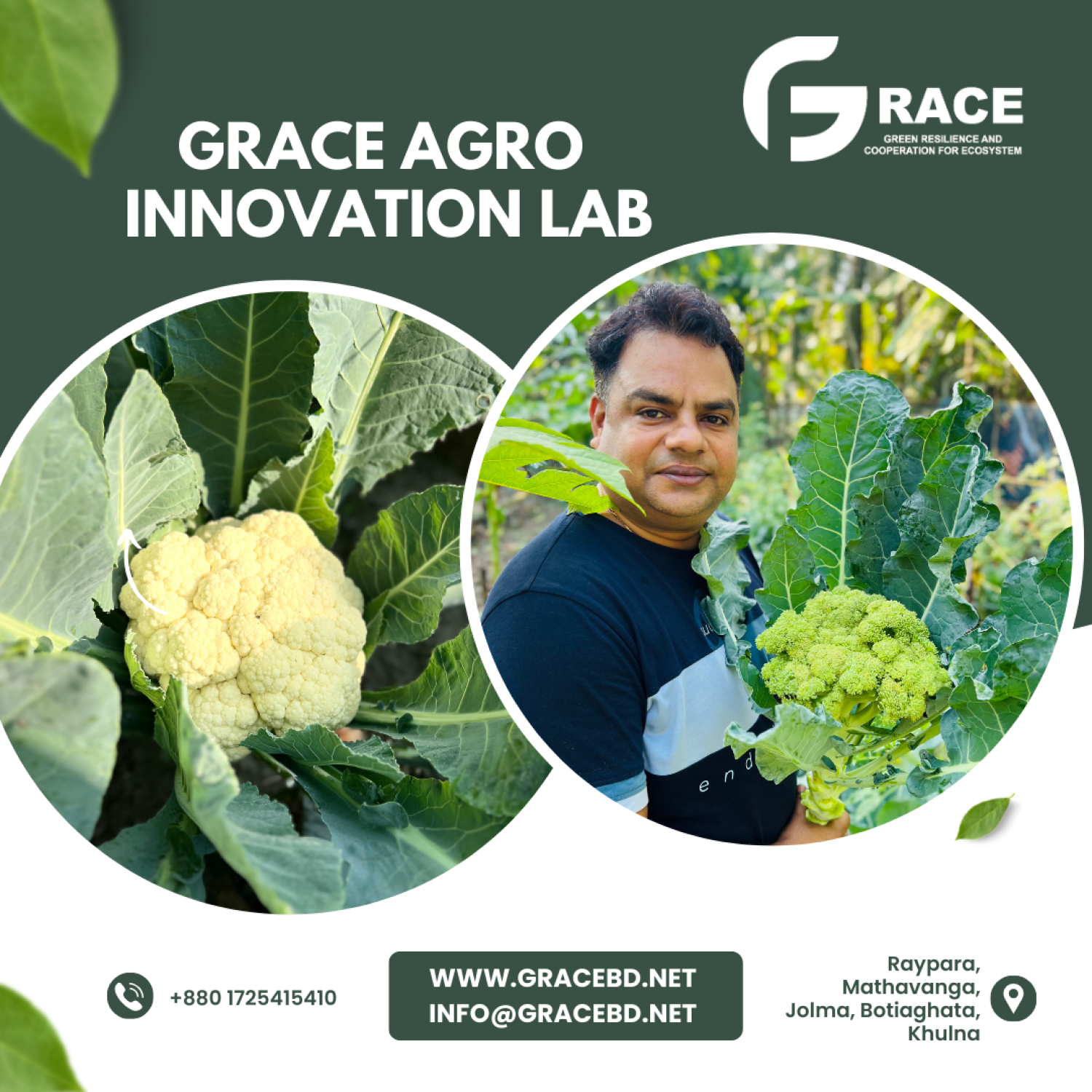
In January 2025, Green Resilience And Cooperation for Ecosystem (GRACE) established a “GRACE Agro Innovation Lab” in peri-urban Jolma Union under Botiaghata, adjacent to Khulna City Corporation. A total of 9 decimals of previously fallow land has now been transformed into a vibrant green hub. The objective is to demonstrate climate-adaptive, sustainable agriculture practices that ensure food safety, water conservation, promote green entrepreneurship, and create learning opportunities for urban and peri-urban communities. The lab aims to serve as a model of innovation, showcasing how even small patches of unused land can contribute to food security, resilient livelihoods, and eco-friendly business opportunities in climate-vulnerable regions.
🌍 Impact of the GRACE AgroInnovation Lab
The GRACE Agro Innovation Lab has quickly become a beacon of hope in peri-urban Jolma, Botiaghata, where climate-vulnerable families face salinity, disasters, and shrinking farmland. By introducing green businesses rooted in climate-smart agriculture, the Lab is not only greening barren land but also sowing the seeds of dignity, resilience, and opportunity.

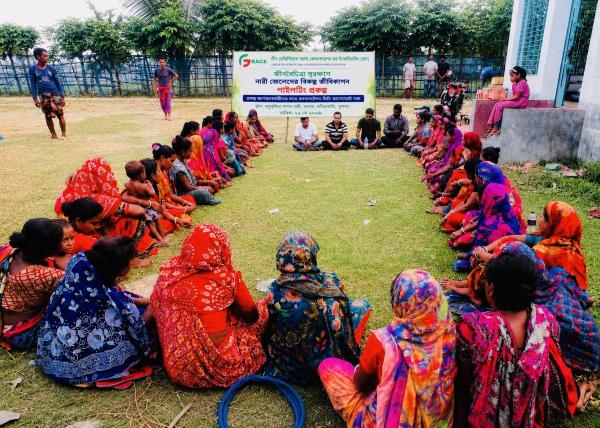
• Women’s Empowerment: Already, 150 women have received both practical and theoretical training on homestead, small, and large-scale climate-smart agriculture. This has translated into safe, nutritious food production for families and new opportunities for income generation.
• Turning Fallow into Fertile: On just 9 decimals of previously barren, saline land, lush vegetables now thrive—an emblem of resilience and a symbol of sustainability for the whole community.
• Year-Round Cultivation: With 15 varieties of rooftop and bed system crops now being grown throughout the year, land and space are being used to their fullest potential. Already, the Lab has harvested 400 kilograms of organic vegetables in only three months, ensuring healthier diets and local food security.

• Eco-friendly Production: The adoption of organic farming practices—bio-pesticides, organic fertilizers, and soil nutrition management—has reduced harmful chemicals while restoring soil health.
• Water-Smart Solutions: In saline-prone areas where fresh water is scarce, the Lab has introduced water-saving and preservation technologies, ensuring that every drop sustains crops and households.
• Seedling Security: A community nursery has been established to produce climate-resilient seedlings, carefully managed for rainy seasons, high salinity, and insect threats—guaranteeing reliable planting materials year-round.
• Safe Food Access: Families of the 20 youth volunteers and surrounding community members are already consuming safe, organic vegetables produced by the Lab—turning training into tangible nutrition on their tables.
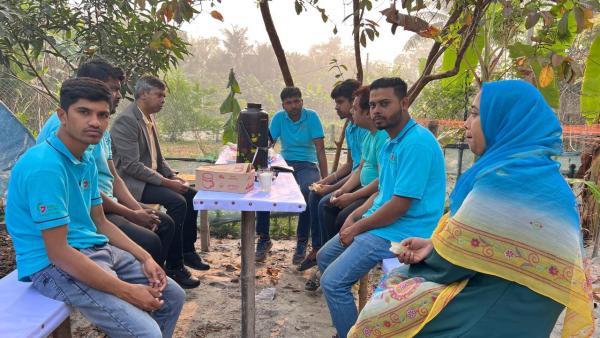
• Youth Engagement: 20 young volunteers have gained 30 days of hands-on experience at the Lab, becoming the next generation of green entrepreneurs and climate defenders.

🌍 “Beyond Vegetables – Cultivating Hope and Resilience”
• Resilience Building: Through vermicompost, worm production, climate-resilient seed varieties, and sustainable techniques, the Lab equips communities to withstand future shocks.
• Women’s Green Enterprises: Women are scaling homestead production into small green businesses, turning household farming into sustainable income streams.
• Youth Leadership: Trained youth are emerging as ambassadors of climate-smart agriculture, carrying forward knowledge and innovation.
• Safe Food & Livelihoods: Families gain access to safe, organic food while strengthening their sustainable livelihood base.
• Replicable Model: The Lab proves that even a small patch of land can transform vulnerability into resilience, dependency into entrepreneurship, and despair into hope—a model for replication across Bangladesh’s climate-affected regions.

🌍Pathways of Impact
• Scaling Climate-Smart Agriculture (CSA): Practices from Jolma Union are already replicated by three volunteers in urban areas, showcasing adaptability and sparking urban greening.
• Sustainable Green Enterprises: Integration of seedling production, water-smart technologies, and organic farming builds the foundation for green businesses that reduce risks and promote self-reliance.
• Community Resilience: Each harvest strengthens food security, women’s empowerment, and youth engagement, proving that innovation and collective action can turn climate challenges into sustainable opportunities.

Explore further

Our Partners